
Mozambique’s Gas Curse: How Fossil Finance Deepens Poverty
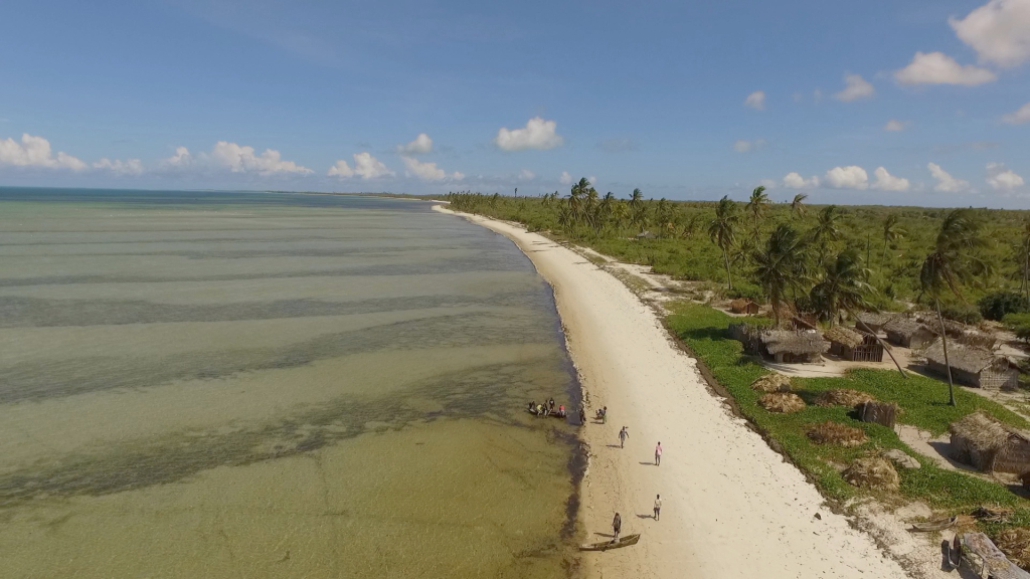
A report on the gas exploitation that threatens to severely harm an ecologically valuable marine area in Mozambique and leave locals economically impoverished has been released. In a webinar that was hosted by Fair Finance Southern Africa and Justiça Ambiental, the author of the report, Dr Chris Engelbrecht, was joined by Manuel Passar who lives in Palma Town, near the gas projects, Kete Mirela Fumo, who provides support to affected families, and Eva Pastorelli, from ReCommon, an Italian civil society organisation that challenges corporate and state power responsible for the plunder of territories, and works to create spaces for change in society. She follows ENI’s activities closely. Together, they presented the harsh realities faced by families affected and those in limbo awaiting replacement land, as well as the environmental effects plaguing the areas.
An introduction to the four projects in question set the scene of the issues that would be unpacked and findings to support them. The four projects are intended as a base for large infrastructure. Onshore processing plants are planned, and Palma Bay will be altered to accommodate marine infrastructure and large ships. The deep-sea environment will be affected by gas wells, extensive pipe networks, and related infrastructure. :
Coral South FLNG: This project is operational and has been exporting since 2022. It is led by ENI and ExxonMobil. And is a floating processing plant anchored at sea.
Coral North LNG: This is a second floating operation, also led by ENI and ExxonMobil. Its investment was recently approved by Mozambique’s government and is expected to start up in 2028.
Rovuma LNG: Work on this project has been halted since 2021; however has been resuming activities. It currently has no final investment decision.
Mozambique LNG: The construction began in 2019, but the project has been in force majeure since April 20221 due to regional violence. This project has been the focus of investigative journalism reports by Politico, Le Monde and SourceMaterial for allegations of links to severe human rights violations. Mozambican, Dutch and UK public institutions have also launched investigations, and civil society is calling for independent international investigations into the allegations. It is led by TotalEnergies.
So, when we advocate for change, it’s by bringing awareness to the significant environmental impacts of gas exploitation. That’s where our work at Fair Finance Southern Africa comes in.
According to Dr Engelbrecht, the two areas in question, Palma Bay and the Rovuma Basin, lie inside a global biodiversity hotspot. With the populace in the area having been its inhabitants for thousands of years, they depend on the natural environment for sustaining their livelihoods. And the importance of the region goes beyond the populace’s needs, it’s characterised by its very diverse and natural wealth.
Speaking candidly on their findings and the wealth of the area, Dr Engelbrecht said, “The study into the value of ecosystems by de Grutt and others over the last 20 years places this area into the value of $100 billion in international US dollars per annum. So, if you take that over 50 years, it’s a $5 trillion international US dollar resource. We are also aware that there are many species about which we know very little. They are so-called data-deficient species, and studies have shown that they are often some of the more valuable species”. Further findings from the report indicate that, “there is an urgent need for more data to enable a broader and more reliable understanding of the combined impacts of future fossil gas extraction, existing impacts from current and past activities, and emerging stresses resulting from locked-in climate change impacts”.
It also reported that, “current scientific understanding of the impacts of deep-sea gas exploitation is not adequate to be able to make reliable assessments about the impacts of gas projects on the Rovuma Basin and surrounding region. And that there is currently a poor understanding of the ecology and biodiversity of the Rovuma Basin region, and it is therefore impossible to make reliable assessments about how they would be affected by gas exploitation”. It alarmingly added that, “the full environmental and climate risk of the gas projects in the Rovuma Basin is much greater than the assessments made in the formal environmental impact assessments (EIAs) conducted for the projects”.
The Human Side of Poverty
Passar delved into the dependence that the locals have on the projects. “The people who have been resettled survived from farming, fishery; however, these means of livelihood have been taken by the projects. We have 700 households around the Magaza area, and they have been waiting around four years for replacement lands. They have been waiting since 2018, and a majority of them have not received replacement lands”.
Kete echoed his sentiments, saying, “The findings from Dr Chris are concerning. In addition to the environmental risks, there are societal risks to consider as we are seeing more vulnerable communities. Most of the people rely on agriculture for livelihood, and with their farms taken and with no access to the sea, we have a humanitarian crisis in Cabo Delgado”.
Some of the impacts that are reported are chemical impacts that have to do with the leakage of not only gas, but especially gas condensate, a very toxic co-product of growing natural gas out of the seafloor. “Many studies have shown we do not understand this very well. Well, we understand it very poorly, to be honest”, said Dr Engelbrecht.
As activists, we cannot remain silent. It is time to stand in solidarity with the affected communities in Mozambique. We must advocate fiercely against the exploitation of resources for profit, demanding accountability from corporations and governments. Together, we can amplify the voices of those who are suffering and fight for a sustainable and equitable future for all. The time to act is now!
Sixolisiwe Ndawo Fair Finance Southern Africa